
10 Diaphragm Release
This module teaches the release of the Diaphragm, the primary muscle of breathing. When the diaphragm enters spasm, it can contribute to acid reflux, shallow breathing, and compression of abdominal organs.
Step 1
Understanding the Problem
The diaphragm is the primary muscle of breathing and a central divider between the thoracic and abdominal cavities.
With every breath, it must:
• descend to allow inhalation
• release and rise during exhalation
• coordinate with the rib cage and abdominal organs
When functioning properly:
• breathing is deep and effortless
• the rib cage expands freely• the abdominal organs move naturally with each breath
When the diaphragm becomes restricted:
👉 the entire system is affected
Clients often experience:
• shallow breathing
• tightness through the lower ribs
• pressure in the upper abdomen
• difficulty fully relaxing
This is not just a breathing issue.It is a central restriction affecting multiple systems at once.
Step 2
The Clinical Problem

A client arrives complaining of shallow breathing, chronic acid reflux, abdominal pressure beneath the ribs, high blood sugar, getting sick too often (white blood cell weakness) or anemia (red blood cells) due to compression of the spleen, or persistent digestive discomfort. due to compression of the intestines.
In many cases, they may also present with metabolic symptoms such as fat accumulation in the liver, elevated triglyceride levels, fatigue, or anemia that has not responded well to conventional treatments.
Despite addressing diet, posture, and other abdominal muscles, the symptoms persist. Often the underlying cause lies in the diaphragm, the primary muscle of breathing. When the diaphragm enters spasm, it stops moving freely and begins to act like a rigid dome pressing downward on the organs beneath it.
This compression can interfere with the normal function of several vital structures, including:
• the stomach
• the liver
• the spleen
• the surrounding vascular and lymphatic circulation
In the central portion of the diaphragm, near the 12 o’clock region of the abdomen, chronic contraction can compress the stomach and causes acid reflux when it is in spasm across the 12 o’clock region.
Along the right anterior diaphragm, roughly between the 9 to 11 o’clock positions, spasm can compress the liver. This pressure may impair circulation through the liver and contribute to fat accumulation and elevated triglycerides. Releasing the diaphragm in this region, combined with clockwise strokes along the inferior border helps to eliminate liver fat.
Along the left anterior diaphragm, around the 2 to 3 o’clock region, compression can affect the spleen, reducing its ability to filter and condition the blood effectively. This directly affects the health of white blood cells, which provides immunity, and red blood cells, which carry Oxygen. For these reasons, releasing the diaphragm across the 2 to 3 o’clock region, combined with smooth clockwise massage, improves immunity and anemia. This is also the region where platelets, and stem cells, exit the spleen to enter the body.
When the diaphragm remains locked in spasm, these organs operate under constant mechanical pressure.
Releasing the diaphragm restores normal movement of the breathing dome and relieves this compression, allowing the organs beneath it to function more efficiently.
For this reason, diaphragm release can produce improvements not only in breathing and digestion, but also in metabolic balance, blood quality, and overall systemic health.
This is why many symptoms that appear to originate from one of these organs are rudimentarily caused by spasm of the diaphragm. Release the diaphragm and release any and all of the problems covered in this modality.
Step 3
Why This Happens

The diaphragm is in constant motion and directly influences multiple organs, including:
• stomach
• liver
• gall bladder
• spleen
• pancreas
• intestines
• major vascular structures
When the diaphragm becomes restricted:
• it compresses these structures
• circulation, neural supplies and visceral functions are compromised
• internal pressure relationships are altered
Each of these organs is associated with its own muscular chain (meridian or fascial pathway).
When an organ is compressed:
👉 its associated muscular system reflects that tension
This is why diaphragm restriction can present as:
• difficulty breathing
• dysfunction of all of the digestive organs
• persistent tension that does not resolve with alternative treatment - the diaphragm must be released manually
From a Releasology perspective:
this represents a disruption in central conduction.
Instead of transmitting movement through breath:
• the system holds
• pressure builds
• prana becomes restricted
Integrated Perspective
Traditional systems have long associated this region with pathways related to breathing and internal movement.
Clinically, this aligns with what is observed:
👉 when the diaphragm releases, multiple systems respond
👉 breathing improves immediately
👉 tension patterns throughout the body begin to resolve
Step 4
Anatomy
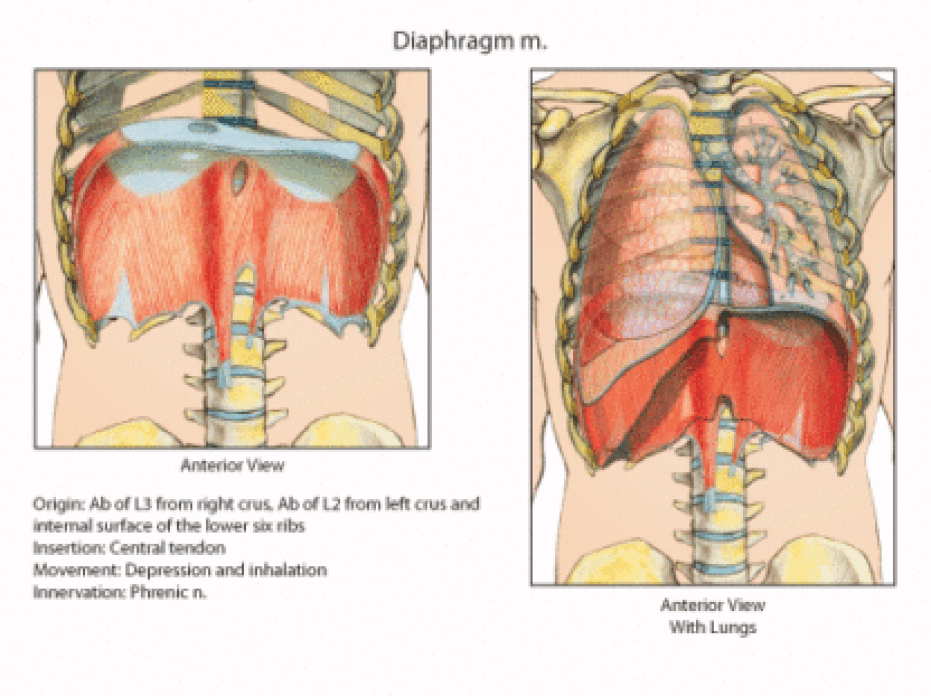


Anterior View of the heart, lungs, liver, stomach, spleen and intestines. The diaphragm compresses these organs when it is in spasm over their region
• 12 o’clock – stomach / reflux• 9–11 o’clock – liver / triglycerides / fatty liver• 2–3 o’clock – spleen / blood quality / anemia
The diaphragm is a dome-shaped muscle attaching to:
• lower ribs
• sternum
• lumbar spine
It forms a functional boundary between:
• thoracic cavity (heart and lungs)
• abdominal cavity (organs of digestion)
Its movement directly influences:
• rib motion
• abdominal pressure
• organ mobility
The diaphragm does not work alone.
It must coordinate with:
• intercostals
• abdominal muscles
• spinal stabilizers
When restricted, this coordination is lost.
Step 5
Palpation and Tissue Assessment

Palpation is performed along the costal margins and lower rib cage.
This region requires:
• sensitivity
• precision
• controlled pressure
Contact
Place fingers gently along the very top of the abdomen about an inch or two below the anterior crest of the ribcage, below the sternum. All of the releases for the diaphragm extend along the line that passes from this point, running parallel to the crest of the ribcage to its lower portions on the right and left. This releases the organs themselves, so pressure should not be overly focused, but the soft muscle tissue of organs does release and will be triggered to release by the yin-pulse. Then, find the edge of the anterior crest ribs and just below that where the diaphragm attaches is our next line of points to release. By palpating, this line on the left, right and center could be tight and painful or not that tight. The first step is to find out with cross-fiber palpation.
Allow the tissue to settle before applying pressure.
Cross-Fiber Assessment
Move across the fibers of:
• diaphragm attachments
• intercostal spaces
• surrounding connective tissue
Feel for:
• resistance
• lack of glide
• areas that feel dense or fixed
Tissue Quality
Restricted tissue feels:
• firm
• resistant
• non-yielding
Healthy tissue feels:
• soft
• responsive
• able to move with breath
Breathing Observation
This is essential.
Observe:
• does the rib cage expand downward and outward?
• does the abdomen move freely?
Restriction presents as:
👉 shallow, limited movement
👉 lack of expansion
Step 6
Neurological Consequences

The diaphragm plays a major role in regulating the nervous system through breathing.
When restricted:
• breathing becomes shallow
• the body remains in a state of mild activation
• relaxation is difficult to achieve
Functional Effects
• reduced oxygen exchange
• increased muscular tension
• decreased coordination between systems
Systemic Influence
Because of its relationship with internal organs:
• restriction can influence multiple body systems
• associated muscular chains may remain in tension
• patterns may persist despite local treatment
Releasology Perspective
This is a disruption in central conduction.
The diaphragm should:
• transmit movement
• regulate pressure
• support flow through the entire system
When restricted:
• force is contained
• movement is reduced
• Prana does not move freely
When released:
• breathing deepens
• tension decreases
• the system reorganizes globally
Step 7
Technique Demonstration
Watch the demonstration carefully.
First Viewing — Flow
• where contact is made along the costal margins
• how the practitioner follows the diaphragm attachments
• the pacing of the work
Second Viewing — Mechanics
• gentle, controlled pressure
• cross-fiber engagement
• how the practitioner follows the breath
Observe the Release
• softening of tissue
• increased movement with breathing
• visible expansion of the rib cage
What to Look For
• where resistance is located
• how the practitioner refines contact
• when the system begins to yield
Step 8
Worksheet Exercise

Download the PDF skeleton image.
Use a red pen tool.
Draw
• diaphragm dome shape
• rib attachments
• lower rib cage
Add Organs (Simplified)
Indicate general location of:
• stomach
• liver
• spleen
Show Restriction
• limited diaphragm movement
• reduced rib expansion
• central compression
Save and click the white button, below, to upload.
If the correct file has uploaded, click the black submit button.
Step 9
Practice Assignment
Clinical Skill Development

Set up a massage table and recruit a practice subject for your first diaphragm release.
If possible, choose a subject experiencing:
• acid reflux
• trouble with triglycerides
• high cholesterol
• blood sugar imbalance
• indigestion
• constipation
Watch the technique video again and pause frequently.
Practice slowly until you can clearly feel:
• correct finger positioning
• correct practitioner body mechanics
• the Yang engagement phase
• the Yin release phase
The goal is not force.
The goal is release.
Once you have performed the release successfully, proceed to the next step.
Step 10:
Record Your Treatment
Show:
• hand placement
• breathing interaction
• controlled pressure

Setup
• client supine
• focus on diaphragm area
Execution
• apply gentle to deep contact into the upper abdomen with an superior trajectory toward the diaphragm
• use cross-fiber palpation
• follow the movement of breath
Focus
• do not force
• move with the breath
• identify the most restricted point
What to Feel For
• acid reflux symptoms to stop
• softening of tissue
• deeper breathing
• increased expansion
Standard
• controlled pressure
• awareness of breath
• recognition of release
Step 11
Client Testimonial

Ask them to comment on:
• how their breathing felt before and after
• what changed
• how did they feel before and after, generally
• do they feel a difference with nausea, acid reflux irritation or any other gastrointestinal related sensation
• rate the difference using a 0 to 10 scale, with 0 being no negative feeling and 10 being the worst they have felt)
Upload your video.
Step 12
Knowledge Check & Module Completion
Answer:
-
What is the role of the diaphragm in the system?
-
How does restriction affect organs and movement?
-
How does this pattern affect breathing?
-
What indicates release?
Submission Checklist
• Worksheet
• Technique Video
• Client Testimonial
Completion Standard
You should be able to:
• identify diaphragm spasm with palpation
• release the diaphragm muscle
• have the ability to release the cause of acid reflux, high triglyceride levels, high liver fat, cholesterol, low immunity, anemia, indigestion and nausea.
• support global system change
Modality Quiz
Complete the following quiz to confirm your understanding of the Diaphragm Release technique. A score of 80% or higher is required to pass this module.
1. The diaphragm primarily controls:
A. Arm movement
B. Breathing
C. Knee stability
D. Wrist motion
2. Dysfunction can contribute to:
A. Improved posture
B. Shallow breathing and organ compression
C. Increased flexibility
D. Stronger muscles
3. Why does diaphragm tension affect multiple systems?
A. It connects only to lungs
B. It influences pressure throughout the torso
C. It controls bones
D. It reduces circulation
4, A symptom may include:
A. Acid reflux
B. Foot pain
C. Wrist instability
D. Jaw tension
5. Release of. the diaphragm decompresses the:
A. Heart
B. Better Liver, Gall Bladder, Spleen and Pancreas functions
C. Pelvis
D. Broad ligament elasticity